Tender Clarification Tracker for IT, MEP, and Security System Vendors
How executives can reduce tender disqualification risk, protect proposal margin, and keep commercial teams aligned when addenda, clarification answers, and requirements keep changing before submission.
Executives need control before the proposal is submitted
For companies that regularly join enterprise or government tenders, the biggest risk is not always the competitor's price. Often, the real risk is operational: the team misses one addendum, interprets one clarification too late, prices from an old assumption, or submits a proposal that no longer matches the latest buyer requirement.
From an executive view, this is painful because the loss is preventable. The sales team may have worked for weeks. The technical team may have designed a strong solution. Management may have approved a tight margin. Yet the opportunity can still be weakened or disqualified because the latest tender reality was not visible in one place.
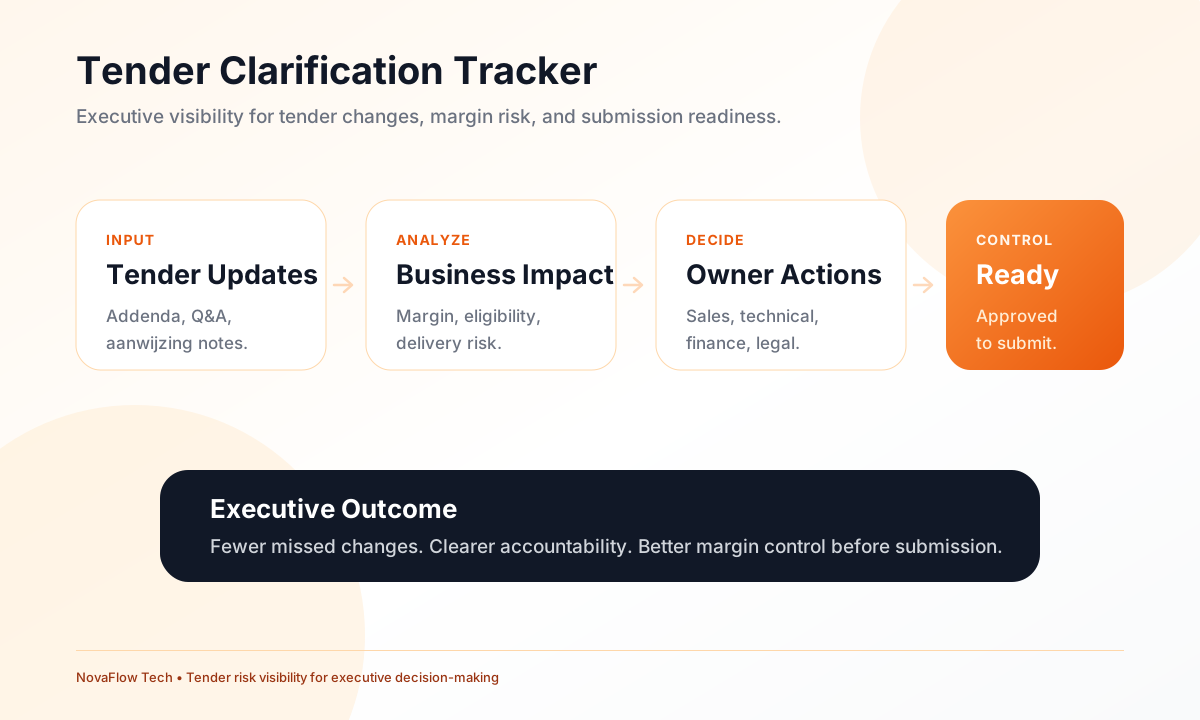
A Tender Clarification Tracker is a management control layer for that gap. It helps executives see which tender changes matter, who owns the response, whether margin is affected, and whether the proposal is genuinely ready to submit. The goal is simple: fewer blind spots before a high-value bid leaves the company.
The real problem is version drift
Tender documents often arrive as a messy timeline instead of one clean source of truth. The first package may include scope, drawings, BoQ, technical specifications, administrative requirements, and commercial terms. Later, the buyer may release clarification answers, meeting minutes, revised documents, or addenda that override earlier assumptions.
If those updates are handled through WhatsApp groups, email threads, shared drives, and personal notes, version drift becomes almost guaranteed. One estimator prices from an old BoQ. One engineer checks compliance against a previous specification. One admin uses the wrong submission checklist. Nobody notices until the final review, or worse, after submission.
The tracker should treat every new tender artifact as an event. What changed? Which requirement does it override? Who owns the follow-up? Does it affect price? Does it affect technical compliance? Does it create a mandatory response before the deadline?
This is not just proposal automation. It is executive risk control
Many AI tools talk about writing proposals faster. That is useful, but it is not the first executive problem. The executive problem is confidence: are we bidding against the latest requirement, with the right price, the right attachments, the right exceptions, and the right internal approvals?
A useful first version should give management a live tender control room. It should show all incoming changes, the commercial impact, the person responsible, the risk level, and the final readiness status. The technology can be sophisticated underneath, but the executive interface must stay clear: what changed, why it matters, and what decision is needed.
That focus matters because tender failure is expensive. A missed clarification does not just waste admin time. It can waste weeks of sales effort, damage credibility with the buyer, and turn a potentially profitable opportunity into either a lost bid or a project with weak margin.
Collect every tender update.
Initial tender pack, addenda, aanwijzing minutes, Q&A answers, revised BoQ, drawings, and submission instructions enter one controlled workspace.
Turn changes into proposal actions.
The agent flags affected clauses, compliance rows, pricing assumptions, certificates, drawings, and technical response sections.
Block avoidable disqualification.
Final release checks mandatory attachments, unresolved clarification items, pricing impact, and human approval before submission.
What executives should be able to see at a glance
Executives do not need to read every page of every addendum. They need a clear view of business impact. Which requirement changed? Is it mandatory? Does it affect price? Does it affect delivery risk? Does it require legal review? Does it create a chance of disqualification?
For IT, MEP, and security system vendors, these changes can quickly become commercial issues. A revised SLA can affect operating cost. A changed drawing can affect installation scope. A new certification requirement can affect eligibility. A late Q&A answer can change the solution design. Management needs to see these issues before the final price and proposal are locked.
The output should not feel like a technical report. It should feel like an executive dashboard: critical changes, margin impact, unresolved responsibilities, submission blockers, and final decision points. Anything uncertain should be escalated for review instead of being buried in the proposal team's chat history.
What changed?
Summarize the tender update in plain business language, with source and deadline.
Why does it matter?
Show impact on margin, eligibility, delivery risk, legal exposure, or scoring.
Who must act?
Assign accountability to sales, technical, estimation, legal, finance, or management.
The compliance matrix should become management visibility
A compliance matrix is not just an administrative file. For executives, it is a risk map. It shows whether the company can honestly meet the requirement, whether an exception is needed, whether supporting evidence exists, and whether any item could block submission or weaken scoring.
This creates a better management conversation. Instead of asking, 'Is the proposal ready?' leadership can ask: what changed since the first tender package, what affects margin, what carries delivery risk, what still needs evidence, and what needs executive approval before submission?
The tracker becomes a control layer around the bid. That is where the business value appears: less last-minute panic, fewer avoidable mistakes, better pricing discipline, and clearer accountability before the deadline.
Pricing impact must be visible early
Clarification changes often affect margin. A small technical answer can add site work, additional equipment, longer warranty, higher certification burden, or a stricter response SLA. If sales sees the update but estimation does not, the company may submit a price that is technically compliant but commercially weak.
The tracker should mark each clarification as no pricing impact, possible pricing impact, or confirmed pricing impact. Possible impact should trigger review by the estimator or commercial owner. Confirmed impact should connect to revised BoQ lines, cost assumptions, or management approval.
This is especially useful for MEP and security system projects where installation conditions, cable distance, access constraints, civil work, mounting requirements, and commissioning scope can quietly change the real cost of delivery.
Keep authority with management, not the software
Tender work carries commercial, legal, and reputational risk. A good system should help the organization notice issues faster, but it should not pretend to make final business decisions. Management still owns pricing, risk appetite, exceptions, and final release.
A strong workflow uses simple management gates: all changes reviewed, margin impact checked, mandatory documents complete, high-risk items approved, and final submission signed off. These gates are not bureaucracy. They protect the company from rushed decisions on high-value opportunities.
The product is not valuable because it sounds intelligent. It is valuable because it makes preventable tender losses harder to happen.
Executive readiness check
Before the bid is released, leadership should know five things.
Have all latest clarifications been reviewed? Are mandatory documents complete? Has margin impact been checked? Are high-risk items approved? Is one accountable owner ready to release the submission?
What NovaFlow would build for executives first
NovaFlow would start with a focused executive tender dashboard. Each opportunity would show the tender value, deadline, current readiness, unresolved changes, margin-impact items, high-risk requirements, owner accountability, and final approval status.
The first version can stay practical: upload tender files, add clarification notes, assign owners, track decisions, and generate a readiness summary for leadership. Once trusted, it can connect to CRM, shared drives, email, approval workflows, and proposal templates.
For companies that regularly join government, enterprise, industrial, and infrastructure tenders, this becomes a practical bid-control system. The promise is not magic. The promise is clearer accountability, stronger margin discipline, fewer missed updates, and lower disqualification risk.
The executive outcome: better bid control
Speed matters, but executive control matters more. A fast proposal that misses one mandatory change is still a failed proposal. A controlled workflow helps the company move quickly without losing sight of risk, margin, and final accountability.
For IT, MEP, and security system vendors, the opportunity is clear: turn scattered clarification updates into one leadership view of the bid. Sales, technical, estimation, legal, and management can finally work from the same current version of the tender reality.
That is the practical value of a Tender Clarification Tracker. It helps executives protect the bid before submission, while most avoidable mistakes are still cheap enough to fix.