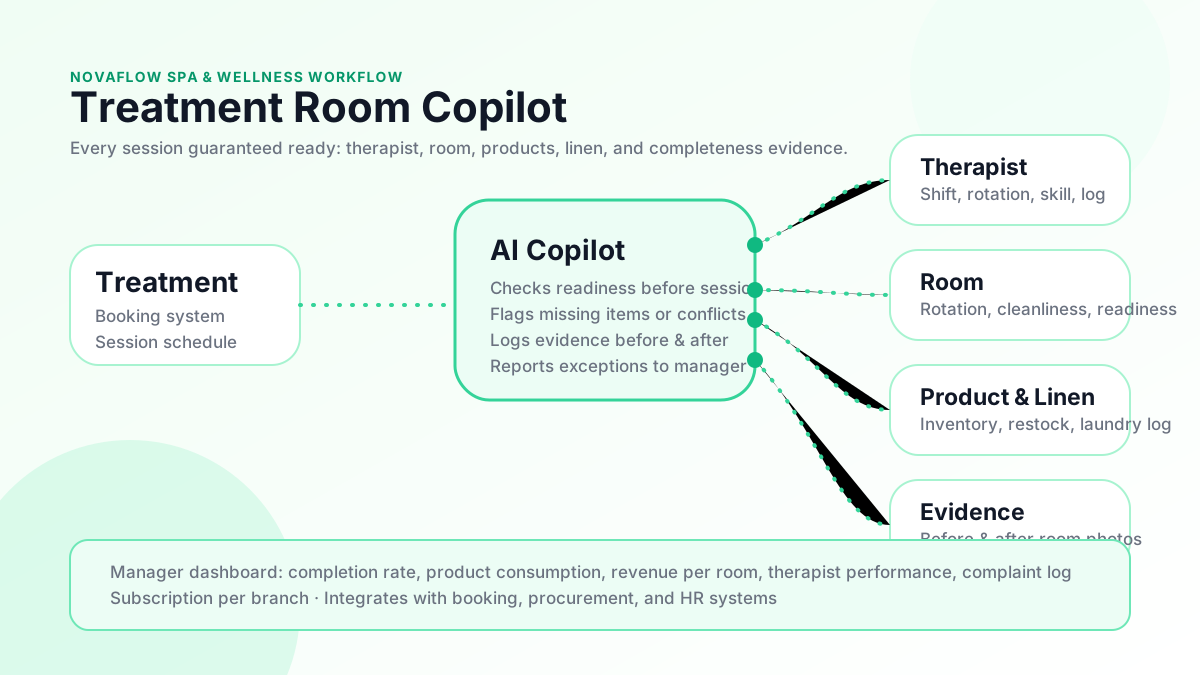
Spa and Wellness Therapist Treatment Room Copilot
How premium spa, massage, and wellness centres can use an agentic AI copilot to manage therapist schedules, room rotation, product inventory, linen readiness, treatment room completeness evidence, and manager oversight in one operational workflow.
Revenue leakage in premium spas is often not about demand
For premium spa, massage, and wellness centres, the constraint is rarely the number of bookings. The real constraint is operational readiness: is a therapist available for this treatment, is the right room ready, are the products in stock, is the linen prepared, and does everything come together before the guest arrives?
When those conditions are not aligned, the business loses revenue in ways that are hard to track. A room sits empty because the therapist is finishing another session. A therapist is idle because the room is still being cleaned and restocked. A treatment is downgraded because a specific oil or cream ran out and no one checked. Linen runs short because the laundry cycle was not aligned with the treatment schedule.
Those small gaps add up to significant lost capacity over a month. Yet most spa operations still manage readiness through manual checklists, chat messages, and supervisor memory. A Treatment Room Copilot turns readiness into a structured, verifiable workflow.
The copilot connects four readiness layers before every session
A treatment session needs four separate layers of readiness. First, the human layer: is the right therapist available, assigned to the right skill and room, and aware of the booking? Second, the room layer: is the treatment room clean, temperature-controlled, aromatherapy-ready, and assigned correctly without schedule conflict? Third, the supply layer: are treatment products, oils, creams, scrubs, aromatherapy blends, disposables, and towels stocked for the session? Fourth, the evidence layer: is completeness captured with before-and-after room photos, product checks, and linen confirmation?
When a copilot checks all four layers together, the business gains a simple but powerful guarantee: every treatment slot is operationally ready before the guest walks in. If any layer is missing, the system flags the gap early enough for someone to fix it instead of discovering the problem when the guest is already waiting.
This moves the spa from reactive readiness management to proactive session assurance.
Match the right person to the right session.
Shift schedule, skill assignment, rotation, treatment history, break time, and real-time availability are visible and conflict-checked before booking confirmation.
Every treatment room ready on schedule.
Room rotation, cleaning status, ambient setup, equipment check, and transition time between sessions are tracked and flagged when a room is not released on time.
Supplies stocked before the session starts.
Treatment product inventory, restock alerts, linen count and laundry cycle, consumable availability, and per-session usage log keep supplies from running out mid-service.
Room completeness captured before and after.
Photo evidence of room readiness before guest entry and after session completion, with timestamp and staff verification for quality and audit.
Therapist management is the hardest operational layer
In a busy spa, the therapist schedule is the most complex variable. Therapists have different skill certifications, product specialisations, language preferences, and guest feedback ratings. A simple shift schedule is not enough. The system needs to match the right therapist to the right treatment while respecting break rotation, treatment duration, room distance, and overtime limits.
When these constraints are managed manually or through WhatsApp, conflicts are discovered late. A therapist double-booked across simultaneous treatments. A preferred therapist assigned to a room that is still occupied. A rotation that leaves a high-revenue room without coverage during peak hours.
The copilot should surface these conflicts during scheduling, not during service. It can suggest alternative assignments, flag gaps, and log therapist performance data that helps management make better long-term staffing decisions.
Inventory and linen are the silent capacity killers
Product and linen management in spas is deceptively operational. A single treatment may use multiple oils, creams, scrubs, wraps, towels, robes, slippers, and disposable items. If any of those items is unavailable, the session either starts late, downgrades the treatment quality, or creates guest dissatisfaction.
The copilot can track product levels per treatment room, flag items approaching minimum stock, and generate restock requests automatically. For linen, the system tracks laundry cycle timing, expected clean linen return time, current consumption rate, and shortage risk before the next peak period.
This is especially valuable for multi-room spas where dozens of sessions run in overlapping schedules. A central inventory view backed by usage logging prevents the scramble of borrowing products from other rooms or running out mid-shift.
Evidence before and after each session creates accountability
Treatment room quality is not just about cleanliness. It is about completeness. Is the room temperature set? Are the essential oils in place? Is the towel warmers ready? Are the robes and slippers available? Is the lighting and music configured for the treatment type?
A before-session photo checklist gives the therapist and management a clear record of readiness. An after-session photo captures the room state before turnover, which supports cleaning verification, lost-property tracking, and maintenance requests.
Over time, this evidence becomes a quality management layer. Management can review trends: which rooms have the most missing-item flags, which shifts produce the most complete handovers, which therapists consistently prepare rooms properly, and where the standard is slipping.
Manager dashboard connects operational data to business outcomes
A useful manager dashboard goes beyond daily readiness. It should show session completion rate, revenue per treatment room over time, product consumption trends, linen utilisation cost, therapist performance metrics, guest complaint log linked to specific sessions or rooms, and exception reports for the current and upcoming shift.
These metrics turn operational data into business decisions. If a specific room underperforms on revenue consistently, is there an equipment, comfort, or therapist assignment problem? If product consumption per session is climbing, is wastage increasing? If a therapist receives repeated complaints about room readiness, is the issue training, workload, or room assignment?
The copilot does not replace management judgment. It ensures that judgment is based on structured evidence instead of memory and anecdote.
type TreatmentSessionReadiness = {
  sessionId: string
  therapistReady: boolean
  roomReady: boolean
  productsStocked: boolean
  linenReady: boolean
  evidenceCaptured: boolean
  overallStatus: 'ready' | 'attention_needed' | 'not_ready'
  issues: string[]
}
Integration with existing spa and hotel systems
Premium spas rarely run their business on one system. They use a booking platform (Bookeo, Mindbody, Zenoti, resort PMS), an inventory procurement system, an HR or scheduling tool, and possibly a CRM for guest history.
The copilot should integrate with these existing systems rather than replace them. It reads booking data to prepare the session plan, connects to inventory for real-time stock checks, and writes session completion data back to the booking system and therapist records.
This integration-first approach makes adoption faster because the spa does not need to rebuild its entire technology stack before the copilot creates value.
What NovaFlow would build for spa operators first
NovaFlow would start with a focused MVP around one spa branch or one treatment floor. The first scope covers session preparation workflow, therapist shift and rotation management, room readiness checklist with photo evidence, product and linen inventory tracking, and manager exception dashboard.
The first version should make one thing obvious to the spa manager: which sessions are ready, which need attention, and what exactly is missing. The system should alert before the guest arrives, not after a problem has already affected the experience.
After the foundation is trusted, the product can expand into therapist performance analytics, per-session profitability, automated restock ordering, guest profile integration, multi-branch oversight, and hotel PMS integration for resort spa chains.
The business outcome is protected revenue per treatment room
A Treatment Room Copilot does not replace therapists or managers. It removes the operational friction that quietly reduces capacity utilisation in premium spas.
When every session has guaranteed readiness—the right therapist, a clean room, stocked products, prepared linen, and captured evidence—the business runs closer to its maximum revenue potential. The gaps that used to cost five or ten sessions per week become preventable.
For spa chains, hotel resort spas, and day spas, that operational leverage translates directly into better utilisation, stronger quality assurance, and clearer insight into what drives revenue per room and per therapist. The opportunity for NovaFlow is to build that layer for a fast-growing wellness industry that is still surprisingly reliant on manual coordination.