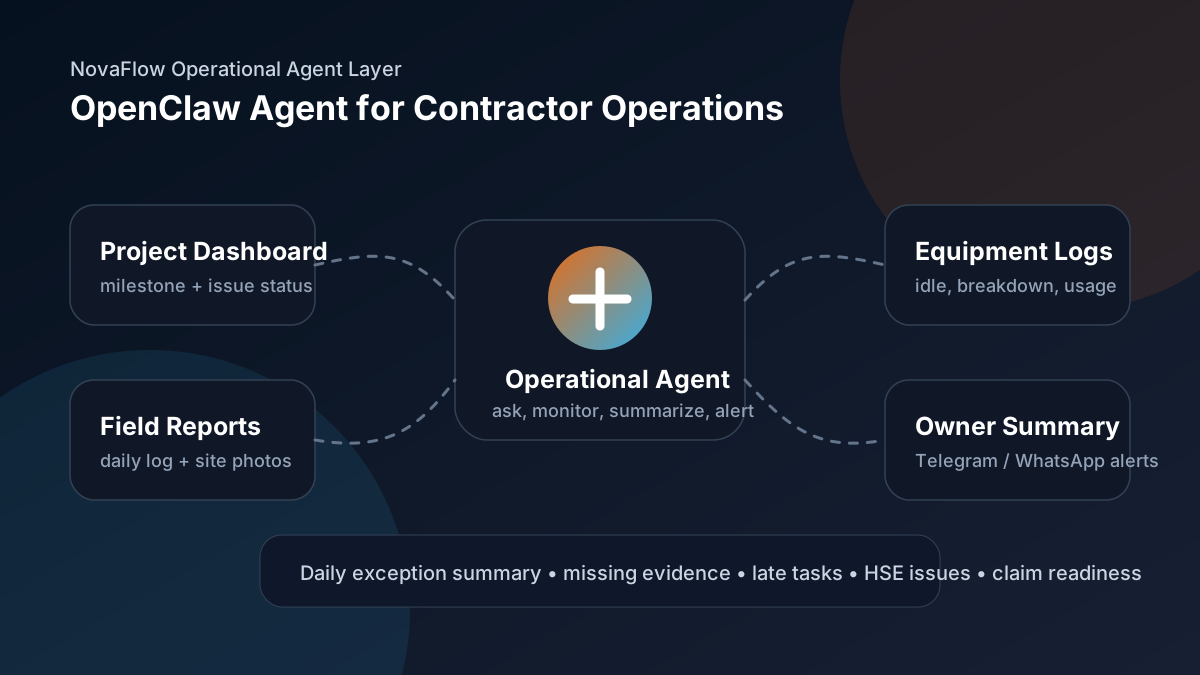
OpenClaw Agent for Contractor Operational Monitoring
How contractors can use an internal operational AI agent to monitor project status, site issues, equipment, evidence, schedules, and daily reports without opening ten dashboards.
Contractor operations move fast. The visibility often does not.
In many contractor businesses, the day moves through many channels at once: project schedules, WhatsApp groups, equipment notes, site photos, procurement updates, payment claims, HSE findings, and reports from supervisors. Each channel may contain something important, but the full picture is rarely visible in one place.
This is where an operational AI agent becomes interesting. Not as a generic chatbot, but as a monitoring layer above the systems the company already uses. It can read project signals, collect exceptions, summarize daily activity, and help owners or managers ask operational questions in natural language.
For contractors, the value is simple: less chasing, faster awareness, and clearer action before small issues become expensive delays.
What an operational agent can monitor for contractors
A contractor owner does not only need a dashboard. They need answers to daily operational questions: which project is late, which site has unresolved material issues, which subcontractor has not submitted progress evidence, which equipment is idle, and which payment claim is at risk?
A good contractor-focused agent can connect to the operational reality of the field: project milestones, daily reports, site photos, HSE findings, equipment status, procurement delays, man-hour notes, and progress claim evidence. The company does not need to replace every tool on day one. The agent can sit above the current workflow and make the important signals easier to see.
That is the real opportunity: a command and awareness layer that checks systems, detects exceptions, asks for missing context, and sends short summaries to the people who need to know.
Which work packages are slipping?
The agent can compare planned milestones, daily reports, and evidence uploads to flag delays early.
Which problems need owner attention?
Material shortage, HSE findings, equipment breakdown, access constraints, and subcontractor blockers can be summarized daily.
Which claims have weak proof?
Photo evidence, timestamps, GPS, and checklist status can be checked before progress claims move forward.
The owner should be able to ask operational questions
A normal dashboard waits for the user to click. An operational agent lets the owner ask questions like: proyek mana yang telat minggu ini, ada issue HSE critical tidak, alat mana yang idle, progress claim mana yang belum lengkap evidence-nya, atau pekerjaan mana yang butuh approval saya hari ini?
This changes the relationship between management and software. The system is no longer only a place to store data. It becomes a daily operating assistant that can surface what matters and reduce the need to chase updates manually.
The output should be concise: daily exception summary, project risk list, missing evidence list, and action items by PIC. Not long AI prose. Contractors need clear operational signal.
A practical architecture: agent above existing tools
The practical architecture is not complicated. The agent sits between chat, tools, APIs, dashboards, schedules, and human instructions. For contractor operations, it can connect to project databases, photo evidence systems, Google Sheets, ERP modules, IoT telemetry, or custom dashboards.
The important design principle is that the agent should not pretend to own all truth. It should read from the right systems, act only through approved APIs, log what it does, and keep humans in control for risky actions.
For example, the agent can send a daily 6 PM summary automatically, but approval of a progress claim, price change, or contractor penalty should still require human decision.
What a first version could look like
A strong first version can start as a focused contractor command center: project list, daily report intake, site photo evidence, issue tracker, equipment notes, progress claim checklist, and Telegram or WhatsApp summary agent.
The first agent abilities should be simple but valuable: answer project status questions, detect missing daily reports, summarize open issues, flag weak evidence, remind PICs, and produce owner-ready daily and weekly summaries.
After that foundation works, the system can expand into procurement monitoring, subcontractor performance, HSE audit, equipment utilization, payment claim readiness, and executive reporting.
The business outcome is faster awareness
For contractors, delays are expensive because they often become visible too late. A small missing material update becomes a schedule issue. A weak photo record becomes a payment claim dispute. A subcontractor blocker becomes tomorrow's owner complaint.
An operational AI agent helps the company see earlier. It does not replace project managers, engineers, or supervisors. It makes their signals easier to collect, summarize, and act on.
That is the real direction for modern contractor software: not only dashboards that wait to be opened, but an agent layer that watches the operation and tells the business what needs attention.