NFVision for Smart Parking and Vehicle Systems
How object detection and license plate recognition can automate vehicle access, parking visibility, traffic flow, and operational reporting with higher precision.
Parking is not just a gate problem
Many parking systems are treated as hardware projects: barrier gate, ticket machine, card reader, and maybe a camera. That is useful, but it often leaves the operation blind. The system may know a vehicle entered, but not whether the plate was correctly read, whether the vehicle overstayed, whether a slot is available, or whether the traffic pattern is becoming inefficient.
A smarter parking system should not only open and close a barrier. It should understand vehicle movement, identify plates, track occupancy, surface exceptions, and give management a reliable operating picture.
This is where NFVision becomes useful: it turns cameras into a vehicle intelligence layer for access, parking, traffic, and reporting.
The core is vehicle detection plus LPR
The first layer is object detection: recognizing vehicles, motorcycles, trucks, and movement in key zones. The second layer is LPR — short for License Plate Recognition — which reads the vehicle plate from the camera image and converts it into structured data that the access system can use.
When both layers work together, the parking system can do more than record video. It can decide whether a vehicle is allowed to enter, match the plate to a member, flag a suspicious mismatch, calculate dwell time, and create a reliable event trail.
The result is a parking operation that becomes more precise, auditable, and easier to manage.
Recognize vehicles and automate gate decisions.
LPR can support member access, visitor matching, blacklist/whitelist rules, and gate event logging without relying only on manual checks.
Know availability instead of guessing.
Camera-based occupancy helps operators see which zones are full, where vehicles dwell too long, and where traffic needs direction.
Turn vehicle movement into operational data.
Entry queues, exit queues, wrong-way movement, lane blockage, and overstay events can become useful signals instead of hidden friction.
A smart parking system should create decisions, not just images
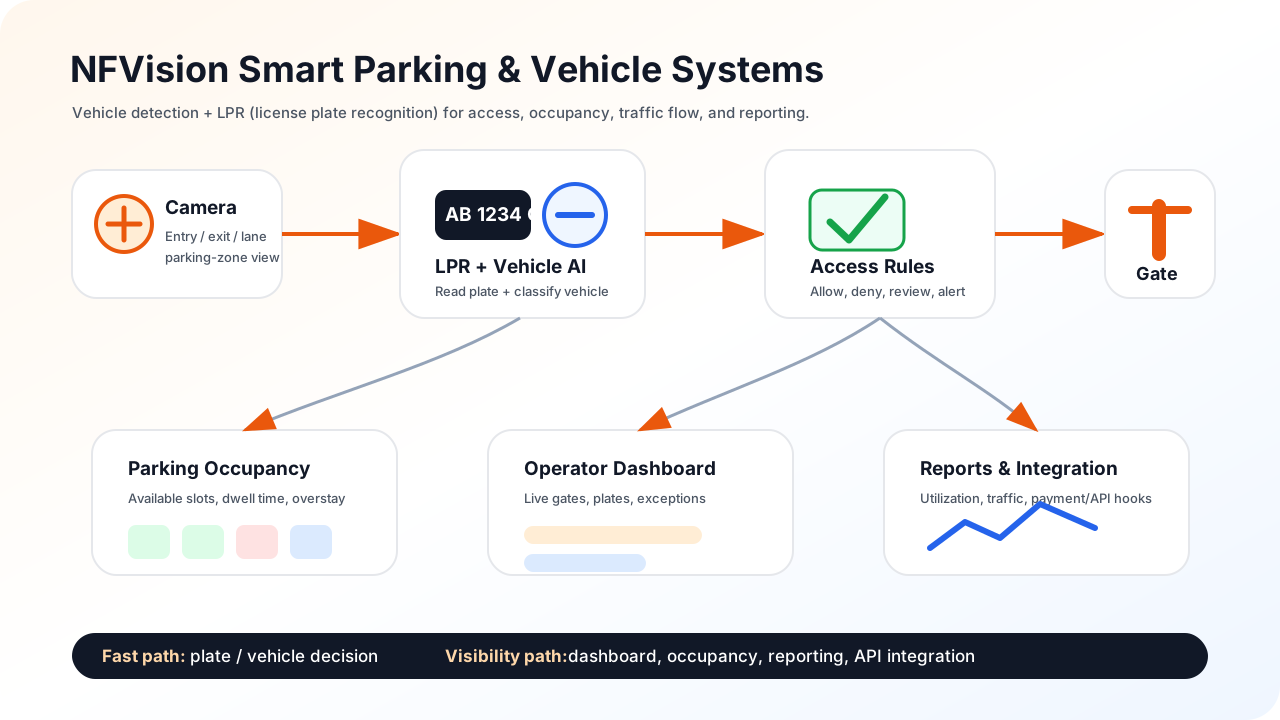
A camera sees the vehicle. The AI detects the vehicle class. The LPR engine reads the plate. The access rule decides what should happen. The dashboard explains the event. The log remembers it.
That chain matters. Without rules and records, computer vision becomes another visual gadget. With rules and records, it becomes an operational system.
For example, a recognized tenant vehicle can be allowed in automatically. An unknown plate can create a visitor flow. A vehicle that stays beyond the allowed window can trigger an overstay event. A camera that fails to read plates correctly can generate a maintenance warning.
The dashboard is where parking becomes manageable
Operators need a dashboard that is clear at a glance: active gate status, last recognized plates, access result, parking occupancy, current alerts, and recent exceptions.
Management needs a different layer: utilization rate, peak-hour entry volume, average dwell time, repeat offenders, gate throughput, unpaid sessions, manual override frequency, and areas that create congestion.
This is why the product should not stop at LPR. Recognition is only the beginning. The value appears when recognition becomes visibility and visibility becomes action.
Where NFVision can be applied
The use case is relevant across malls, office buildings, factories, residential complexes, warehouses, hospitals, schools, campuses, logistics yards, and paid parking operators.
Each environment has different rules. A factory may care about authorized vehicles and truck dwell time. A residential property may care about tenant access and guest tracking. A mall may care about occupancy, traffic flow, and payment integration. A logistics yard may care about truck queue, dock assignment, and plate-based gate control.
NFVision should adapt to the operational rule, not force every site into the same parking template.
System architecture in practical terms
The architecture can stay simple. Cameras capture entry, exit, lane, and parking-zone views. NFVision runs object detection and LPR locally or on a controlled edge server. A rule engine decides access and exceptions. The dashboard shows live status. The database stores vehicle events and reports. Integrations connect to gate controllers, payment systems, visitor systems, or existing facility platforms.
The most important design choice is separation. The gate decision path should be fast and reliable. The dashboard and reporting path can be richer and more analytical.
This keeps the system responsive while still giving management the data it needs.
type VehicleEvent = {
  cameraId: string
  plateNumber: string
  vehicleType: 'car' | 'motorcycle' | 'truck' | 'unknown'
  eventType: 'entry' | 'exit' | 'overstay' | 'blocked_lane' | 'manual_override'
  accessDecision: 'allowed' | 'denied' | 'review'
  confidence: number
  timestamp: string
}
Accuracy depends on the real environment
LPR accuracy is not only about the model. It depends on camera angle, plate size in frame, motion blur, lighting, reflection, rain, dirt, vehicle speed, and local plate format. A good deployment validates these factors before promising production accuracy.
This is why NFVision should start with a site survey and pilot camera test. The team should evaluate entry/exit camera placement, night visibility, glare, lane speed, and whether the plate is readable at the moment the system needs to make a decision.
Better camera placement often improves the system more than simply choosing a bigger AI model.
A practical pilot can start small
A strong pilot does not need to cover the entire building or site. It can start with one entry lane, one exit lane, and one parking area. The goal is to prove plate recognition, access decision flow, dashboard usability, and event reporting.
Once the pilot is stable, the system can expand into multiple gates, parking-zone occupancy, overstay alerts, payment integration, visitor pre-registration, and analytics for traffic planning.
This staged approach reduces risk and gives the customer evidence before scaling.
The business case is operational control
Smart parking is not only about convenience. It can reduce manual gate handling, improve security visibility, reduce visitor confusion, surface unpaid or overstayed sessions, and help management understand how the parking asset is actually used.
For many sites, the parking area is a daily source of friction. Vehicles queue, guards make manual decisions, visitors wait, records are incomplete, and managers only see problems after complaints arrive.
NFVision helps turn that friction into a more controlled workflow: detect, recognize, decide, log, report, and improve.