GrandNova Residence AI as a Modern Estate Operations Layer
How NovaFlow demonstrates a modern estate operations model through a public residence site, resident portal, workflow agent, and structured management data layer.
A property brand layer is not enough
Most property demo sites are built like brochures. They show a hero section, a few cluster cards, some lifestyle copy, and a contact button. That may help sales, but it does nothing for the operational reality that starts after residents move in.
GrandNova Residence was built as a different kind of demo. The public site still presents the estate properly from the management and developer point of view. But behind it, the system also demonstrates how a modern housing estate can run resident services, complaints, visitor passes, home-away reports, and internal data workflows through a lightweight AI-assisted operations layer.
The result is not just a landing page. It is a compact property operations prototype.
The product surface must separate sales, service, and operations
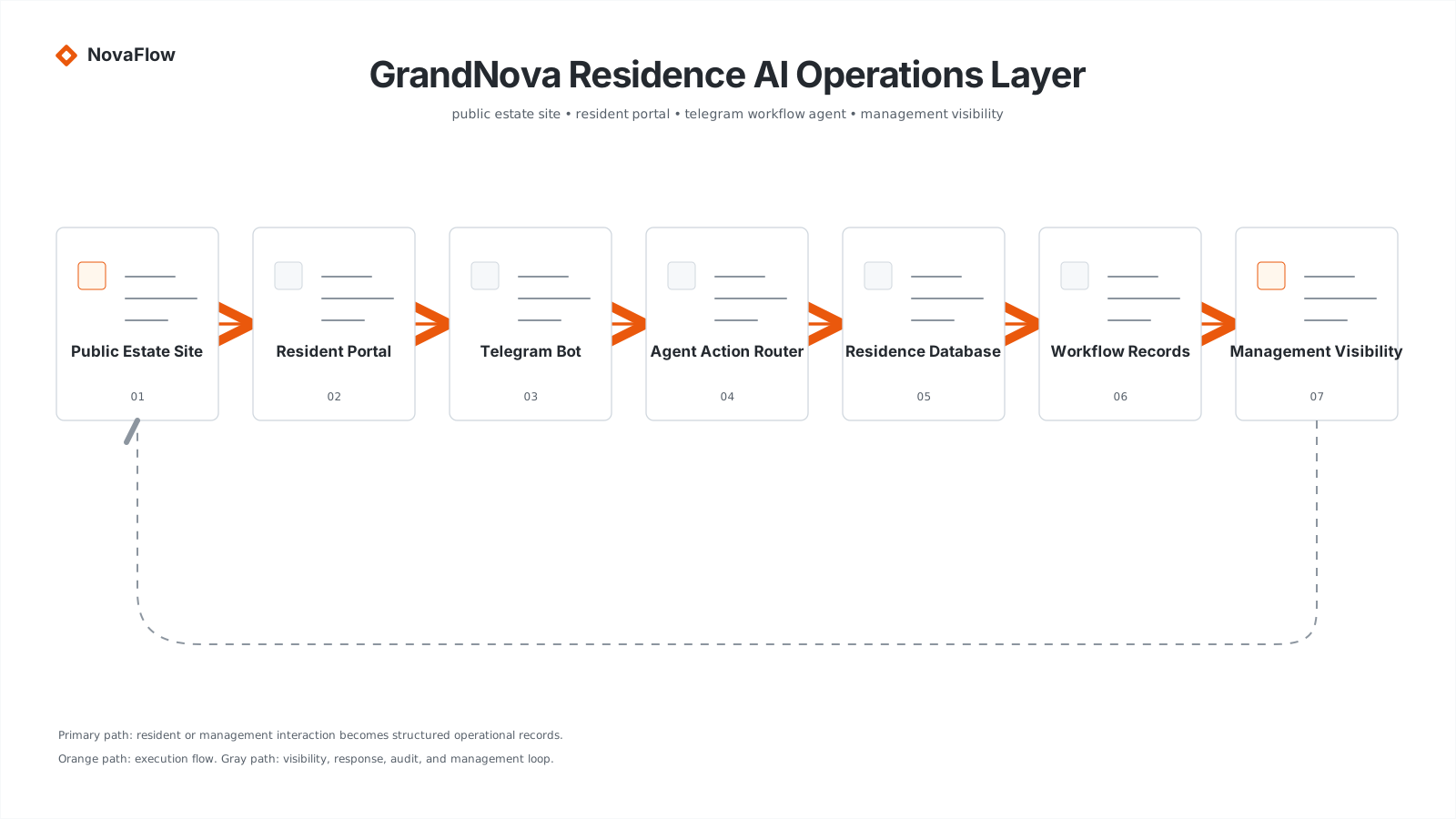
The demo lives at perumahan.novaflowtech.id and is structured around three surfaces. The first surface is the public website for GrandNova Residence, designed to sell the estate experience: premium clusters, residential identity, management confidence, and a clear product story. The second surface is a resident portal at /portal, where residents can access service-style modules in a more private context. The third surface is the Telegram bot, GrandNovaResidenceBot, which acts as the conversational operations interface.
This split matters. A housing estate has different audiences. Prospective buyers need confidence. Residents need service. Management needs visibility. The system should not collapse all of those into one generic page.
Why Telegram first
For the first version, Telegram is the fastest way to demonstrate natural workflow interaction without forcing residents into a heavy app. A resident can report a complaint, request a visitor pass, submit a letter request, mark the house as empty during travel, or ask management questions from a familiar chat interface.
The important part is that the bot is not designed as a command-only toy. It is built around natural language intent. A resident should be able to say: “The water in my house is off, can management check?” and the system should understand that this is likely a complaint or facility issue, ask for missing context if needed, create or update the relevant record, and respond with a useful status.
Natural language is only valuable when it triggers structured action.
The agentic workflow design
The first layer is the message intake handler. It receives Telegram updates, identifies the chat, parses the message, and sends it into an agentic routing layer. The agent does not directly mutate data blindly. It returns a structured action: create complaint, follow up existing complaint, create visitor pass, create letter request, mark home-away status, draft broadcast, create database row, query internal records, answer, or ask clarification.
The backend then executes that action deterministically. This is the safest pattern: let the language model interpret messy resident language, but let regular code perform the database mutation, validation, duplicate detection, and permission checks.
type AgentAction =
  | { type: 'complaint.create_or_followup'; unit: string; category: string; summary: string }
  | { type: 'visitor.create'; guestName: string; unit: string; visitDate: string }
  | { type: 'letter.create'; unit: string; requestType: string; notes: string }
  | { type: 'homeaway.create'; unit: string; startDate: string; endDate: string }
  | { type: 'database.query'; table: string; filters: Record<string, string> }
  | { type: 'ask_clarification'; question: string }
Duplicate complaint detection is not a minor feature
Resident complaint systems fail when every follow-up creates a new ticket. If a resident reports the same water issue three times, management does not need three separate complaints. It needs one active complaint with a clearer event trail.
The GrandNova demo includes duplicate active complaint detection by cluster, unit, category, and recent time window. If an open ticket already exists, the bot reuses it and appends the new message as a follow-up instead of creating a redundant ticket.
That small detail makes the system feel operationally mature. It turns chat repetition into better context rather than database noise.
async function createOrFollowUpComplaint(input) {
  const existing = await complaints.findActiveSimilar({
    cluster: input.cluster,
    unit: input.unit,
    category: input.category,
    windowHours: 72
  })

  if (existing) {
    return complaints.addEvent(existing.id, {
      type: 'resident_followup',
      message: input.summary
    })
  }

  return complaints.create(input)
}
Resident workflows should map to real estate operations
A useful residence bot is not a general assistant. It should stay inside the estate domain: complaints, facilities, visitor access, security coordination, resident letters, empty-house notifications, management broadcasts, internal databases, service status, and dashboard support.
That scope control matters. If a resident asks an unrelated question, the bot should politely refuse or redirect. If a resident asks about estate operations, it should help quickly. A domain-bounded agent is easier to trust than a bot that tries to answer everything.
The operational database pattern
The interesting part of this demo is the internal group database concept. Management teams often keep ad-hoc lists: resident contacts, security notes, pending complaints, visitor logs, facility issues, payment reminders, vendor contacts, or cluster-specific information. The bot can help create, update, and query those records through natural language while the backend keeps the data structured.
That pattern is powerful because it gives management a lightweight operating system without forcing every user to learn a complex admin interface. Chat becomes the input surface. The database remains the source of truth.
The public site still matters
The public-facing side of the demo is intentionally not written from an internal builder perspective. It should not say “phase build” or “technical showcase.” It should present GrandNova Residence as a real housing estate from the developer and management point of view.
The brand structure is clear: GrandNova Residence as the main residence identity, with HayNova, ForrestNova, and PineNova as clusters. That gives the demo enough product reality to feel like a property platform, not a generic AI website.
What this demo proves about property operations
The GrandNova Residence demo proves that property technology does not have to start with a giant ERP. A small, well-designed system can already demonstrate the key operating loops: public brand presence, resident login, complaint intake, visitor management, home-away reporting, internal data creation, and management visibility.
The value is not in making the bot sound clever. The value is in turning resident messages into structured operations that management can track.
Build the estate workflow before buying software
Every residential estate has different operational rules: visitor policy, security process, complaint categories, cluster structure, resident communication style, facility escalation, and management reporting. A generic template will always miss the details.
At NovaFlow Tech, we map those details first. Then we build the workflow agent, portal, database, and dashboard around the estate’s actual operating model. GrandNova Residence is the demo. The real product is the ability to turn messy residential operations into a clean, trackable workflow system.