A Queue Promise Board for Pet Clinics and Grooming Teams
How pet clinics and premium grooming teams can reduce WhatsApp overload, missed updates, and uncertain pickup times with a simple operational promise board.
Pet owners do not only wait. They worry.
A pet clinic or grooming studio is different from many service businesses. The customer is not only buying a service. They are trusting the team with an animal they care about.
That changes the emotional pressure of the operation. If the queue is unclear, if the pickup time keeps moving, or if the owner receives no update, the experience can feel worse even when the clinical or grooming work is actually good.
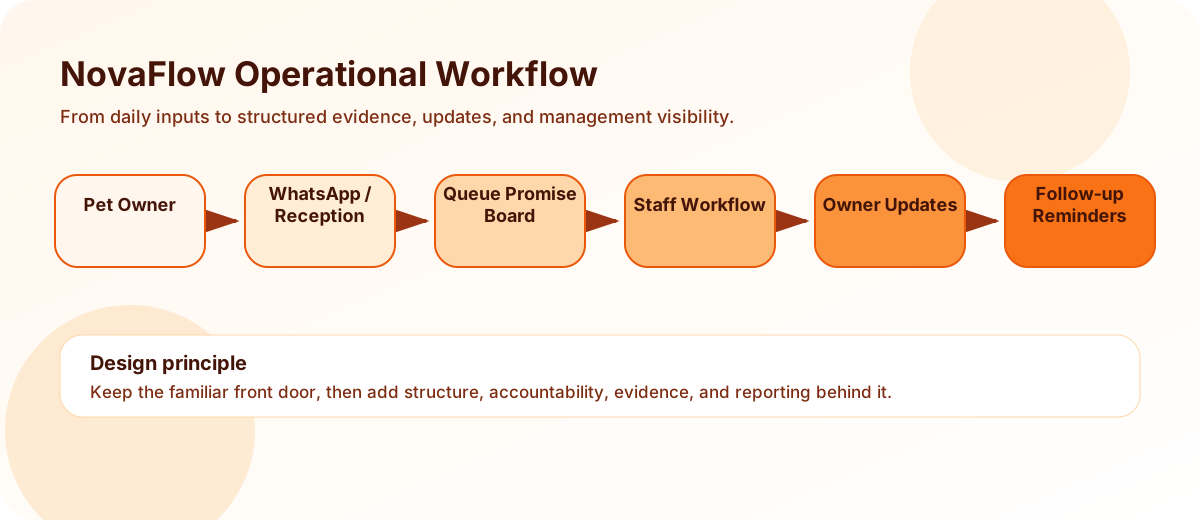
This is why a Clinic Queue Promise Board can be valuable. It turns scattered coordination into a visible operating layer: queue status, service stage, estimated completion, owner updates, and follow-up reminders in one place.
The queue is usually hidden inside WhatsApp and staff memory
Many small and premium pet-care businesses already coordinate through WhatsApp, receptionist notes, staff chat, and direct verbal updates. That can work when volume is low. It becomes fragile when consultations, grooming, vaccination, minor treatment, and pickup questions happen at the same time.
One owner asks whether grooming is done. Another asks for a photo. A vet assistant needs to confirm medication. A groomer is waiting for approval on a coat cut. Reception is answering new bookings. The team is busy, but management cannot easily see which promise is at risk.
The real problem is not that staff are careless. The problem is that the workflow is not visible enough.
A promise board makes every pet visit trackable
The board should show each active visit as a simple card: pet name, owner name, service type, current stage, assigned staff, expected completion, next update time, and any special notes.
For grooming, the stages might be checked in, waiting, bathing, drying, cutting, final check, ready for pickup. For clinic visits, the stages might be registered, waiting, consultation, treatment, medication, payment, follow-up required.
The point is not to create a heavy hospital system. The point is to make the day visible enough that teams can keep promises before customers need to chase them.
See which pets are waiting, in progress, or ready.
Reception, grooming, and clinic staff can work from the same live board instead of checking scattered chats.
Send timely updates before owners ask.
Photo updates, delay notices, pickup alerts, and care notes can be sent from structured service events.
Turn visits into repeat-care reminders.
Vaccination, medication, grooming schedule, or post-treatment checks become reminders instead of memory tasks.
WhatsApp can remain the customer front door
A strong system does not need to force pet owners into a complicated app on day one. WhatsApp can remain the main communication channel because that is where most customers already are.
The difference is what happens behind WhatsApp. Instead of every message becoming another chat bubble, the system can connect the message to the active visit, update the queue status, assign the next action, and record the owner communication history.
This lets the business keep the familiar channel while improving the operating discipline behind it.
Estimated completion is a customer-experience feature
For pet owners, uncertainty is often the stressful part. A simple “ready around 15:30” can reduce repeated check-ins. If the estimate changes, a proactive update can protect trust.
The board can calculate estimated completion from service type, current workload, staff availability, and manual adjustment. It does not need to be perfect. It needs to be visible and honest.
When the team sees late items early, they can communicate before the customer becomes frustrated.
Photo updates can be structured instead of random
Many grooming and pet-care teams already send photos manually. The issue is consistency. Some owners receive updates. Some do not. Some photos get buried in staff phones. Some updates are sent too late.
A queue board can include update checkpoints: after check-in, during grooming, before pickup, or after treatment. Staff can attach photos to the visit record, then send them through the approved owner channel.
That creates a better experience and also gives the business a clean service history.
The follow-up layer is where recurring revenue appears
Pet-care businesses are not only one-time service businesses. Vaccinations, grooming intervals, medication checks, dental care, skin treatment, and nutrition advice all create natural follow-up moments.
If those reminders depend only on memory or manual spreadsheets, revenue leaks quietly. A structured system can schedule the next reminder at checkout and keep future visits visible.
This is where a simple queue product can grow into a customer-retention system for pet clinics and grooming studios.
What NovaFlow would build first
NovaFlow would start with a focused pilot: active queue board, service stages, staff assignment, owner update templates, photo attachment, ready-for-pickup notification, and follow-up reminders.
The first version does not need full accounting, inventory, or medical-record complexity. It should solve the daily pressure first: who is waiting, what is in progress, which owner needs an update, and which pet needs follow-up after the visit.
After that foundation is trusted, the product can expand into membership, package tracking, vaccination reminders, prescription notes, customer segmentation, and management reporting.
The outcome is calmer pet-care operations
A Clinic Queue Promise Board helps the team move from reactive chat handling to proactive service management. Owners get clearer updates. Staff get one shared view. Management sees bottlenecks before reviews or complaints expose them.
For pet clinics and grooming teams, this is not just software. It is a better promise system: clearer waiting, better communication, and more disciplined follow-up.
That is the kind of niche workflow product NovaFlow can build quickly, test locally, and grow into a recurring SaaS or managed app for the pet-care market.