How AI Vision Can Turn CCTV Into a Smarter Warehouse Management System
How warehouses can connect WMS barcode scans with CCTV and AI vision to create searchable video evidence for packing, disputes, and quality control.
Most warehouses already know what should happen
Most warehouses already have a Warehouse Management System. They scan boxes. They track inventory. They know when an item moves from receiving to storage, picking, packing, and dispatch.
That digital discipline is important. But it still leaves a practical question when something goes wrong: what actually happened during the physical packing process?
A barcode scan can tell the system that a box was processed. A WMS can show the order, operator, station, and timestamp. But when a customer claims an item is missing, damaged, or wrongly packed, the system often has no visual memory of the event.
CCTV records everything, but it is rarely connected to the box
Warehouses usually already have CCTV. The problem is not always lack of video. The problem is that the video is disconnected from operational identity.
If a dispute appears three days later, the team may need to manually search through hours of footage. They need to know which station handled the box, what time the packing happened, which camera angle is relevant, and where the useful clip begins and ends.
That investigation is slow because the CCTV timeline and the WMS timeline are not linked. The WMS knows the box. The CCTV knows the scene. The missing layer is the bridge between the two.
The better workflow starts with the first scan
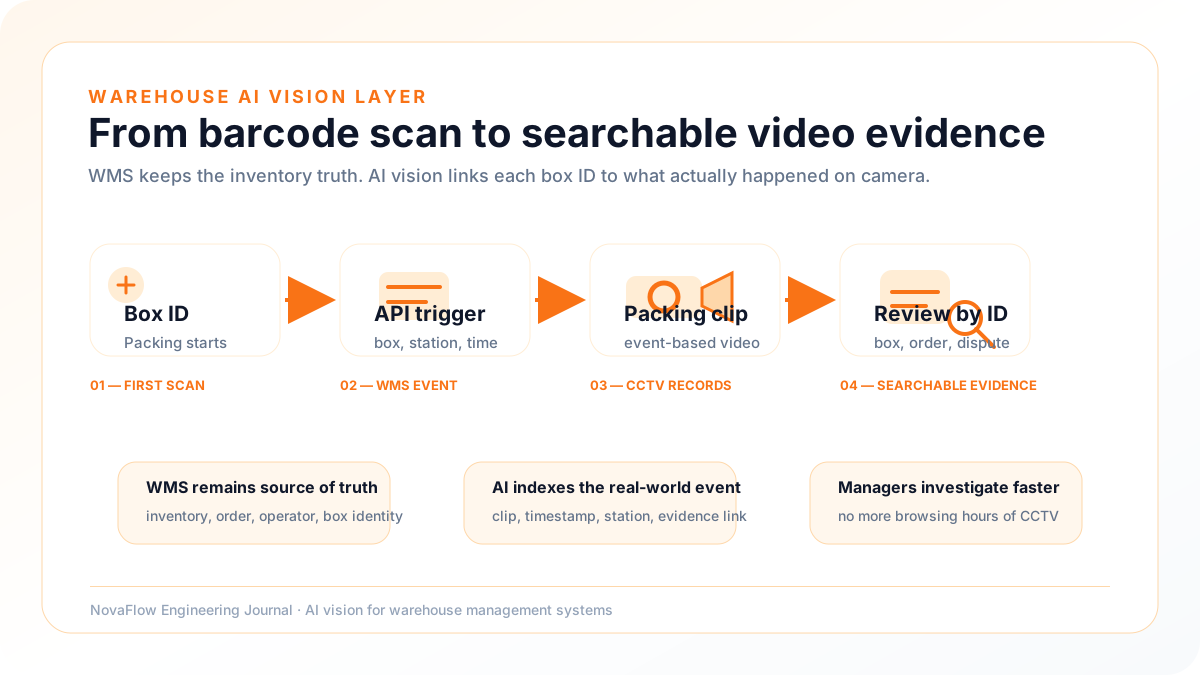
Imagine a simple packing workflow. A warehouse operator scans a box for the first time. That scan triggers an event in the WMS. The WMS sends an API call to the AI vision system with the box ID, order ID, timestamp, packing station, and camera location.
From that moment, the CCTV camera near the packing station starts recording a dedicated evidence clip. The operator continues working normally. Items are placed into the box. The packing process does not need a complicated new behavior.
When packing is completed, the operator scans the same box again. This second scan tells the AI vision system to stop recording and close the evidence event.
The result is searchable video evidence
Now the warehouse has more than a log. It has a structured visual record connected to the box identity.
The system can show that Box ID BX-10293 was packed at 10:15 AM, completed at 10:22 AM, handled at Packing Station 3, and linked to a specific CCTV evidence clip.
Instead of browsing through long camera timelines, the team searches by box ID, order ID, or packing station. Within seconds, they can open the exact video segment related to the packing event.
Every packed box gets a visual record.
The WMS keeps the box identity while AI vision attaches the real-world packing clip to that identity.
Search by box ID instead of scrolling CCTV.
Dispute review becomes faster because the relevant video segment is already indexed and linked.
Repeated mistakes become easier to analyze.
Managers can review whether errors come from process design, training gaps, station layout, or unclear packing rules.
This improves accountability without replacing the WMS
The important point is that AI vision does not need to replace the existing Warehouse Management System. The WMS remains the source of truth for inventory, order, customer, SKU, box identity, and operational status.
AI vision simply connects that digital identity to physical evidence. It turns passive footage into an operational evidence layer.
That makes the system easier to adopt. The warehouse team keeps the same scan behavior. The integration happens around the existing workflow instead of forcing a full system replacement.
The integration can stay technically simple
A practical first version does not need to be overbuilt. The workflow can be reduced to five steps: first scan starts the event, WMS sends box identity to the AI vision service, CCTV records the packing process, second scan stops the recording, and the video clip is stored with searchable metadata.
The metadata matters as much as the video. Box ID, order ID, operator, station, camera ID, start time, end time, and storage path make the clip useful. Without metadata, video is just another file.
With metadata, the warehouse gains a searchable evidence database.
type PackingEvidenceEvent = {
  boxId: string
  orderId: string
  stationId: string
  cameraId: string
  operatorId?: string
  startedAt: string
  completedAt?: string
  videoEvidenceUrl?: string
  status: 'recording' | 'completed' | 'review_required'
}
Storage strategy should follow the evidence model
Storage sizing depends on camera count, resolution, bitrate, and retention policy. If all cameras record continuously for six months, the system may require tens of terabytes of storage.
But if the warehouse records only event-based packing clips, storage becomes much more efficient. Instead of saving every empty minute, the system stores the evidence that matters: the actual packing event.
A practical retention model can keep full-quality evidence for the recent dispute window, then compress or archive older clips based on business rules. The goal is not to store everything forever. The goal is to keep the right evidence long enough to protect operations.
AI can add more value after the evidence layer is stable
The first value is linking video to the box ID. After that foundation is stable, AI can support more advanced checks: detecting whether an item was placed into the box, whether the box stayed in frame, whether the packing station was blocked, or whether a process step was skipped.
But the system should not start by promising magic. Start with evidence. Make the workflow reliable. Make the clip searchable. Make investigation faster. Then add computer vision rules where the operational value is clear.
That sequencing keeps the project grounded and easier for warehouse teams to trust.
The business case is dispute handling and process control
This kind of system helps in several practical ways. It improves accountability because each packing event has a visual record. It reduces investigation time because the team no longer needs to manually search long CCTV timelines. It strengthens customer dispute handling because the warehouse can check what actually happened. And it improves quality control because repeated packing mistakes become easier to review.
The best part is that it does not ask the WMS to become a video system. It lets each system do what it does best.
A scan tells the system what should happen. AI vision helps prove what actually happened. That is a better way to think about warehouse management: not only inventory movement, but physical evidence connected to the workflow.