AI Proposal and Tender Factory for Engineering Suppliers and Contractors
How engineering suppliers, contractors, and system integrators can use AI to draft faster offers, compliance matrices, BoQs, and risk notes while keeping human review and price checking mandatory.
Proposal work is where many engineering teams lose speed
Engineering suppliers, contractors, and system integrators often lose time before the real project even starts. An RFQ arrives, the technical specification is long, the scope is unclear, drawings are attached, commercial terms are hidden inside documents, and the sales team needs input from senior engineers before a serious offer can be sent.
The result is familiar: quotation takes too long, important clauses are missed, BoQ drafts are rebuilt manually, and the team depends too much on a few experienced people. AI can help here, but only if it is designed as a proposal factory with review controls, not as an autopilot that sends offers blindly.
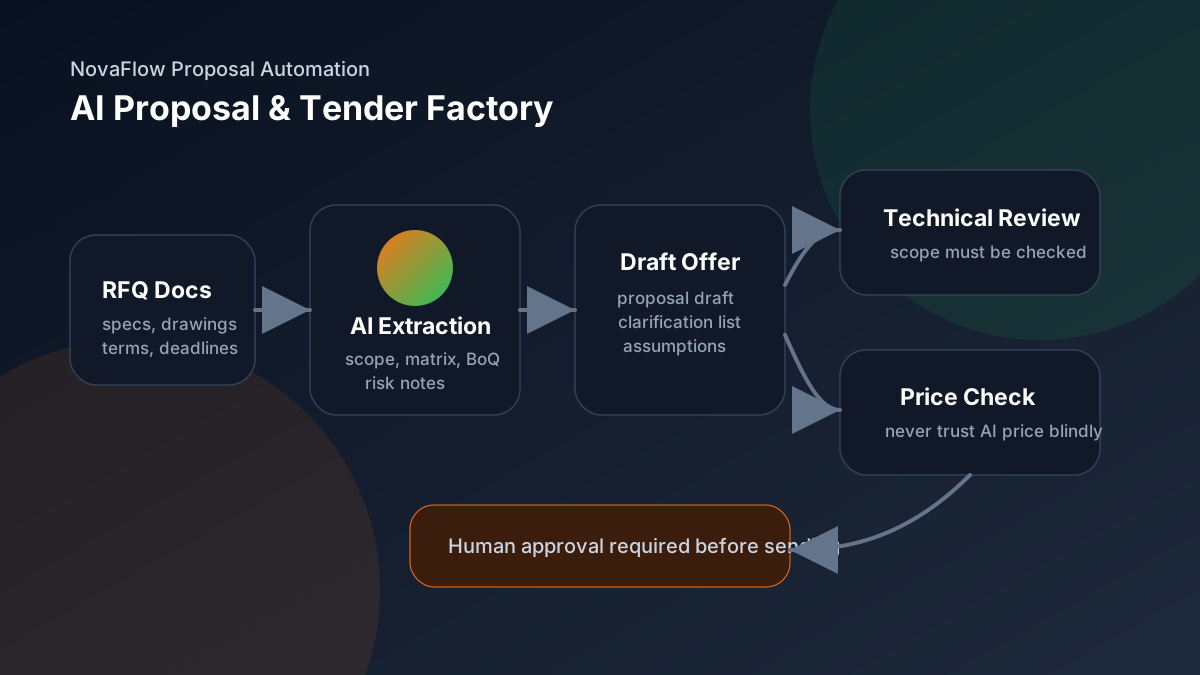
A practical AI Proposal and Tender Factory helps the team read RFQ documents, extract requirements, draft technical responses, prepare compliance matrices, build early BoQ drafts, surface risks, and package the first proposal faster.
What the AI should prepare
The first useful output is not a beautiful proposal. It is a structured understanding of the opportunity. The system should identify client name, project name, requested scope, technical specs, deadlines, mandatory documents, payment terms, delivery assumptions, warranty requirements, and missing clarifications.
From there, the AI can draft a compliance matrix, list matching products or services, propose a BoQ structure, generate clarification questions, and prepare a first technical narrative. This gives the sales and engineering team a better starting point.
The value is speed and consistency. The team still decides what is technically correct and commercially safe.
Turn documents into structured requirements.
Scope, specs, deadlines, required attachments, clauses, and missing information become easier to review.
Create first drafts faster.
Technical narrative, compliance matrix, BoQ skeleton, and clarification list are prepared for human editing.
Price and scope must be checked.
The system should block direct sending until technical, commercial, and pricing review are complete.
The most important caution: never trust AI pricing blindly
AI can help draft a BoQ and suggest items, but price is too sensitive to leave unchecked. Catalogue prices may be outdated. Vendor discounts may change. Freight, taxes, installation, site access, margin, currency, lead time, and warranty assumptions can all affect the final offer.
This is why the system should clearly separate draft from approved price. AI may propose a line item, but the price should come from an approved price list, ERP, supplier quote, or manual commercial review. If the price source is unknown, the system should mark it as not approved.
The proposal should not be sent to the client until a human has checked scope, quantity, unit price, margin, delivery, terms, and exclusions. Fast proposal is good. Fast wrong proposal is expensive.
Guardrails make the product trustworthy
A strong proposal factory needs permission and status controls. Draft generated by AI should be labelled as draft. Price not verified should be labelled clearly. High-risk clauses should be flagged. Missing documents should block final release. Every change should be logged.
The system can use approval states such as AI draft, technical review, pricing review, management approval, ready to send, and sent. This keeps the workflow disciplined while still giving the team a major speed boost.
For engineering companies, trust matters more than novelty. The product must help people work faster without making them careless.
function canSendProposal(proposal) {
  return proposal.technicalReview === 'approved'
    && proposal.pricingReview === 'approved'
    && proposal.marginChecked === true
    && proposal.requiredDocumentsComplete === true
    && proposal.riskNotesReviewed === true
}
Who would use this
The best early users are engineering suppliers, MEP contractors, automation vendors, HVAC suppliers, panel builders, fire safety suppliers, CCTV and access control integrators, industrial equipment distributors, and system integrators that respond to many RFQs every month.
These teams often have enough technical complexity to justify AI support, but not enough spare senior manpower to review every opportunity from zero. A proposal factory gives juniors a stronger draft and gives seniors a cleaner review queue.
The product can also work internally for NovaFlow when preparing technical offers, decks, scopes, and implementation proposals.
What NovaFlow would build first
NovaFlow would start with a focused internal tool: upload RFQ documents, extract requirements, create compliance matrix, draft scope of work, build BoQ skeleton, list risks, list clarification questions, and generate proposal draft in the company's format.
The first version should include strict warnings: AI-generated content must be reviewed, price must be checked against approved source, and final sending requires human approval. This keeps the product safe for real commercial use.
Once proven internally, NovaFlow can package it for engineering suppliers and contractors as a managed AI workflow product.
The outcome is speed with discipline
AI should not replace commercial judgment. But it can remove a lot of repetitive proposal preparation work: reading documents, extracting requirements, building first drafts, checking missing items, and preparing review material.
For engineering suppliers and contractors, that can mean faster response, better consistency, fewer missed clauses, and cleaner handoff between sales, engineering, and management.
The principle is simple: let AI prepare, let humans approve, and never send a price that has not been checked.