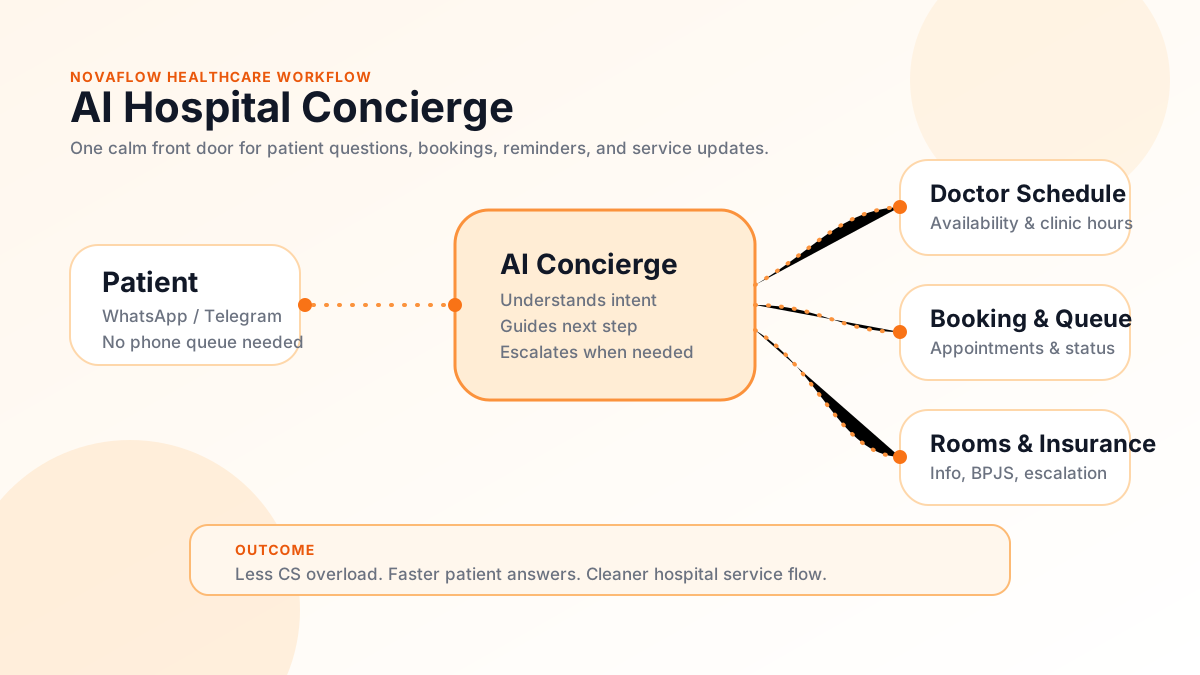
AI Hospital Concierge for WhatsApp and Telegram
A minimalist but practical look at how hospitals can use an AI concierge to answer patient questions, support clinic booking, send control reminders, show queue status, and reduce pressure on customer service teams.
Hospitals need a calmer first response layer
A hospital's first digital experience is often not the website. It is the message a patient sends when they are confused, anxious, or simply trying to get one clear answer: what doctor is available, can I book today, how long is the queue, is there a room, or what should I prepare for BPJS and insurance?
When every question goes to customer service, the team becomes overloaded with repetitive work. Patients wait longer. Phone lines stay busy. Simple questions compete with urgent cases. The hospital may already have the information, but it is scattered across schedules, registration desks, queue systems, room availability, and insurance procedures.
An AI Hospital Concierge solves this narrow but high-demand problem. It gives patients one official chat channel through WhatsApp or Telegram, then guides them to the right next step without forcing them to call for every small question.
The use case is simple: answer, book, remind, update
The most useful version does not need to diagnose patients. In fact, it should not pretend to. The first product should focus on service navigation: doctor schedules, clinic booking, appointment reminders, queue status, room information, and BPJS or insurance guidance.
That scope is powerful because it touches the questions patients ask every day. A parent wants to know when the pediatrician is available. A returning patient needs a control reminder. Someone in the outpatient queue wants to know whether they can arrive later. A family member asks whether a room class is available. These are repetitive, operational, and very suitable for a guided AI workflow.
The patient gets faster answers. Customer service gets fewer repetitive chats. The hospital gets a cleaner digital service experience without starting from a giant transformation project.
Patients ask in the channel they already use.
WhatsApp or Telegram becomes the official front door for schedules, booking, queue status, and general service questions.
The concierge gives the next best step.
It checks available information, asks only necessary follow-up questions, and keeps the conversation short.
Humans handle the sensitive cases.
Clinical, billing, complaint, and exception cases move to staff with context instead of starting from zero.
What patients should be able to do
The patient experience should feel lightweight. They send a message, choose or type what they need, confirm their identity when required, and get a clear answer or action. No long menu tree. No confusing app download. No waiting just to ask whether a doctor practices today.
A good concierge can support common requests: check doctor schedule, book a clinic visit, reschedule an appointment, receive a control reminder, check estimated queue status, ask room availability, understand registration requirements, and get BPJS or insurance document guidance.
The point is not to make the bot look smart. The point is to remove friction from the patient's journey before they arrive at the hospital.
What the hospital gets back
For the hospital, the benefit is operational leverage. Customer service no longer spends the whole day repeating the same answers. Registration teams receive cleaner pre-visit information. Patients arrive with better expectations. Management can see what people are asking most often and where the service flow creates confusion.
This is also a strong entry point for digital modernization because it does not ask the hospital to replace everything on day one. The concierge can begin as a controlled layer around FAQs and appointment workflows, then connect gradually to doctor schedules, queue systems, SIMRS, room dashboards, CRM, or patient engagement tools.
The commercial case is easy to understand: reduce repetitive service load, improve patient experience, and create a scalable communication layer for the hospital.
CS load goes down.
Routine questions are handled automatically, while staff focus on exceptions and sensitive conversations.
Answers arrive faster.
Patients do not need to call repeatedly just to check schedules, queues, reminders, or requirements.
Fast MVP, high demand.
The first version can be deployed around practical workflows, then expanded through integration.
Keep medical boundaries clear
A hospital concierge should not behave like an independent doctor. It should not diagnose, prescribe, or make clinical decisions. Its job is service navigation, information retrieval, workflow guidance, reminders, and escalation.
That boundary makes the product safer and easier to adopt. If a message looks urgent, clinical, emotional, or outside the bot's authority, the concierge should route it to the right human team. If information is uncertain, it should say so and escalate instead of guessing.
In healthcare, trust is part of the product. Clear limits are not a weakness. They are what make the system credible.
What NovaFlow would build first
NovaFlow would start with a focused AI Hospital Concierge MVP: official WhatsApp or Telegram intake, doctor schedule lookup, clinic booking request, reminder flow, queue-status answer, room-info request, BPJS and insurance FAQ, and human handover with conversation context.
The interface should be minimalist. The workflow should be measurable. How many chats were handled automatically? Which questions repeat most often? How many bookings were created? How many cases needed escalation? These numbers help hospital management see value quickly.
From there, the product can grow into a broader patient journey platform: follow-up after discharge, satisfaction surveys, chronic-care reminders, lab result notifications, executive reports, and deeper SIMRS integration.
The result: less waiting, less repetition, better service
The best hospital AI use cases are not always the most futuristic. Sometimes the strongest opportunity is making the daily service flow easier for thousands of patients and staff members.
An AI Hospital Concierge gives the hospital a practical starting point: official chat access, faster answers, cleaner booking support, better reminders, queue visibility, and structured escalation. It is simple enough to launch, useful enough to matter, and flexible enough to expand.
That is why this use case is strong for hospitals and strong for NovaFlow: fast MVP, clear benefit, high demand, and a natural path into deeper hospital operations.