Agentic AI as Executive Decision Infrastructure
How NovaFlow helps leadership teams convert scattered business context into governed decisions, weekly execution clarity, and structured follow-through.
The executive problem is not lack of effort
Most owners are not blocked because they cannot think. They are blocked because decisions arrive faster than context can be assembled. A tender needs review. A project is slipping. A client is late on payment. A department says the issue is urgent, but nobody can prove whether it is strategic or just operational noise.
A chatbot can answer a question. That is useful, but shallow. Agentic AI becomes valuable when it can preserve company context, inspect tools, run scheduled checks, split a question into workstreams, and return with a decision memo instead of a paragraph of generic advice.
For a business owner, the highest leverage is not asking AI to “give ideas.” The leverage is building a decision layer that continuously keeps track of what the business is trying to do, what has already been decided, what data is missing, and what trade-offs are becoming expensive.
The system is a decision loop, not a prompt
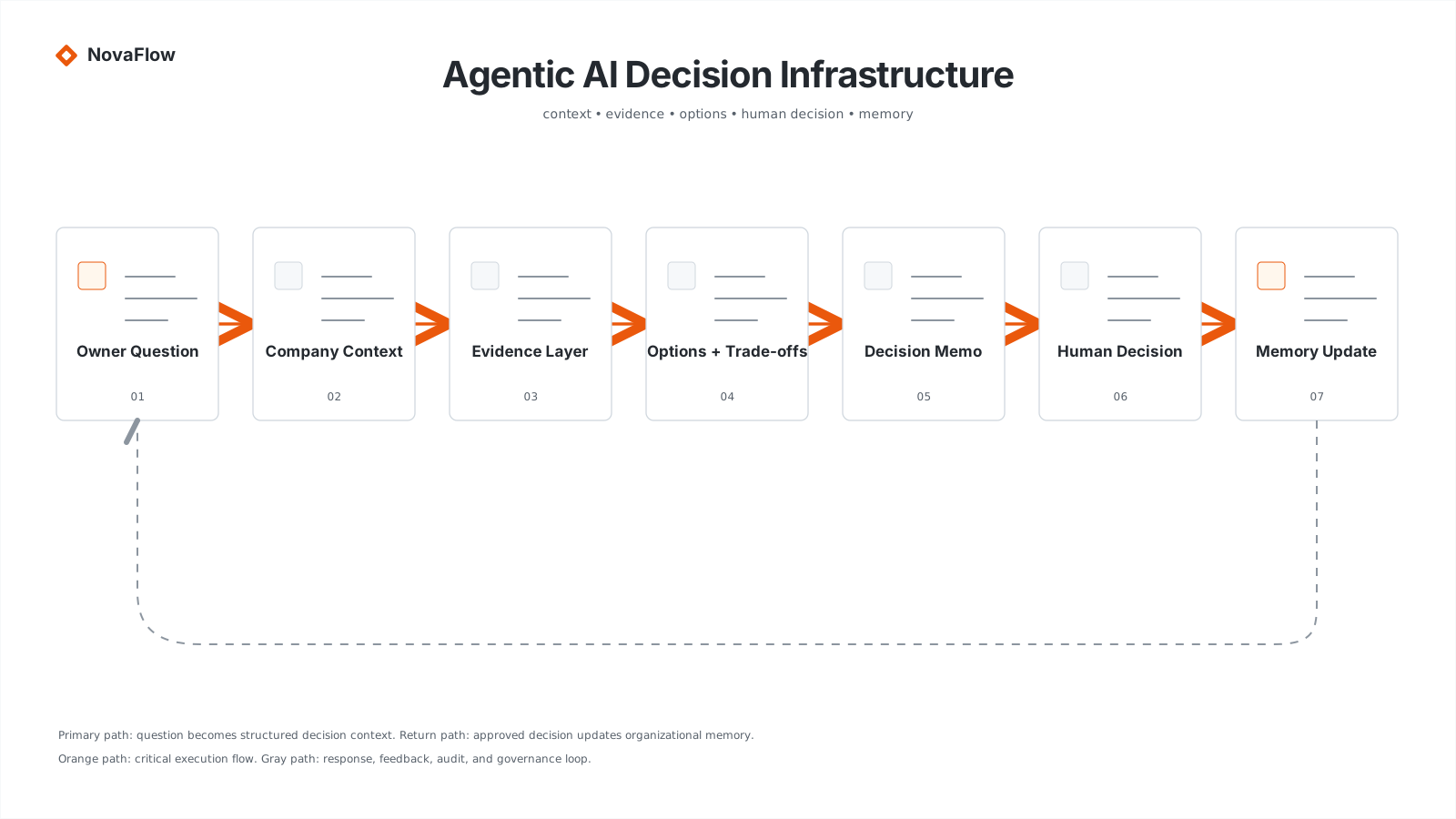
The useful pattern is not “ask AI anything.” The useful pattern is a structured loop: capture the question, retrieve evidence, load relevant company memory, generate options, score trade-offs, request human approval, and write the final decision back into memory.
This is where OpenClaw-style systems are different from simple chat. The agent can live in Telegram or WhatsApp, but it can also call browser tools, read files, run scheduled briefings, coordinate sub-agents, and maintain persistent memory. The interface can be simple. The execution layer should be disciplined.
What the agent should actually produce
The best output for owner-level AI is not a long chat answer. It is a decision memo. A memo forces the agent to state the question, context, options, trade-offs, recommendation, missing data, and review date.
That format makes weak thinking visible. If the agent cannot identify the evidence behind a recommendation, the memo exposes it. If the options are not meaningfully different, the memo exposes that too.
type DecisionMemo = {
  question: string
  context: string[]
  evidence: Array<{ source: string; finding: string }>
  options: Array<{ name: string; upside: string; downside: string; risk: string }>
  recommendation: string
  missingData: string[]
  decisionOwner: string
  reviewDate: string
}
Separate operational noise from executive attention
Owners get dragged into too many daily issues because the business has no filter. A vendor delay can be a minor operational issue, or it can signal supplier dependency. One late invoice can be follow-up work, or it can expose a cashflow system problem.
An agentic layer can classify incoming issues by business impact. Does it affect cashflow? Has it repeated more than three times? Can it be delegated? Does it require owner judgment? This is not glamorous AI. It is decision hygiene.
function classifyAttention(issue) {
  if (issue.cashflowImpact || issue.legalExposure) return 'owner_decision'
  if (issue.repeatedCount >= 3) return 'system_issue'
  if (issue.canDelegate) return 'operational_delegate'
  return 'team_handles'
}
Weekly briefing is the smallest serious implementation
Start with a Monday briefing. The agent checks calendar pressure, project notes, invoice status, unanswered messages, and known risks. Then it sends a short briefing: focus this week, risk that needs attention, decision stuck, task to delegate, and thing to ignore.
This is where the system starts feeling real. The owner stops asking “what should I look at?” and starts responding to a concise operating picture.
await agent.runWeeklyBriefing({
  inputs: ['calendar', 'email', 'project_risks', 'invoice_status'],
  output: 'five_line_owner_briefing',
  delivery: 'whatsapp_or_telegram',
  requireHumanDecision: true
})
Governance is not optional
The stronger the agent becomes, the more governance matters. AI may draft a follow-up email. It should not send a sensitive pricing proposal without approval. AI may analyze tender documents. It should not upload restricted commercial data into a public model. AI may recommend a decision. It should not become the decision maker.
A practical governance model separates public, internal, confidential, and restricted data. It also defines which actions can run automatically, which actions require approval, and which actions are never delegated.
const policy = {
  draftEmail: 'auto_allowed',
  sendExternalEmail: 'human_approval_required',
  analyzeTender: 'allowed_after_redaction',
  changePricing: 'human_only',
  updateDecisionMemory: 'after_human_confirmation'
}
The outcome is better owner judgment
Agentic AI is not useful because it sounds intelligent. It is useful when it gives the owner more room to think. It keeps context warm, turns scattered data into options, exposes assumptions, and makes follow-up harder to forget.
The winning companies will not be the ones that “use AI.” They will be the ones that build decision infrastructure around AI.